
Custom Search

Potawatomi War Chief
(1744 - 1831)
Chief Senachwine
(Sen-Noge-Wone/Znajjewan/Sinnowchewone/Sunawchewone/Segagewan)
Grandfather of Wis-Ki-Ge-Amatyuk (Captain John Buckshot) and Wah-qua-bosh-kuk (Roily Water)
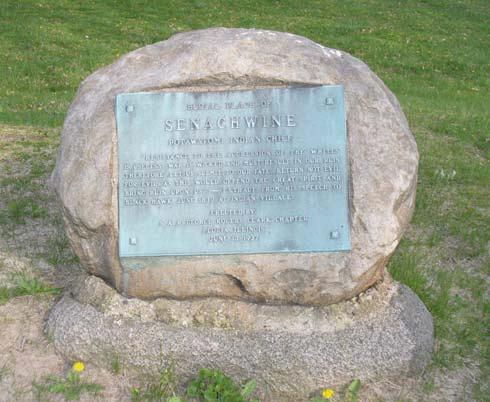
Above: Gravesite of Chief Senachwine (Sen-Noge-Wone) Illinois
Sen-noge-wone was war chief of the Potawatomis for a great many years and was superseded in 1814 - 1815 by Chief Wa-ban-see (Wabaunsee) and Chief Shabbona. Wa-ban-see and Shabbona having taken part with the whites against Black Hawk in 1832, were pushed aside and superseded by Kaltoo (Ogh-och-pees), eldest son of Sen-noge-wone, who died soon after and was superseded by another son Wabsai who died in 1869 and was superseded by Pam-muck-muck, his grandson. After his death in 1874, Shaugh-nes-see was elected chief and in 1880 when this information was taken by the Potawatomi agency still held that position.
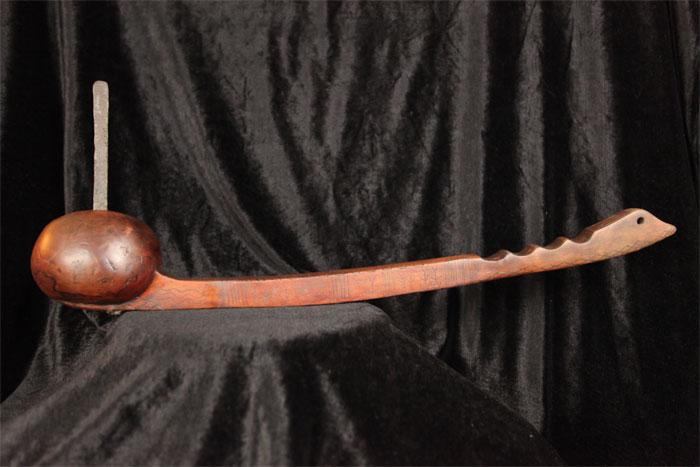
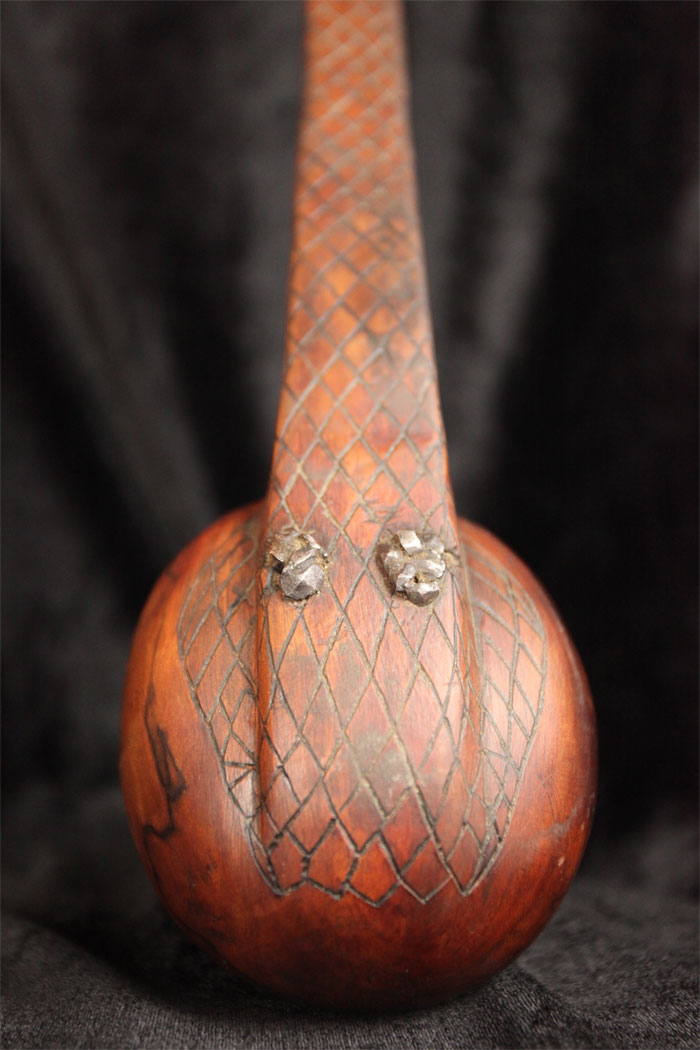
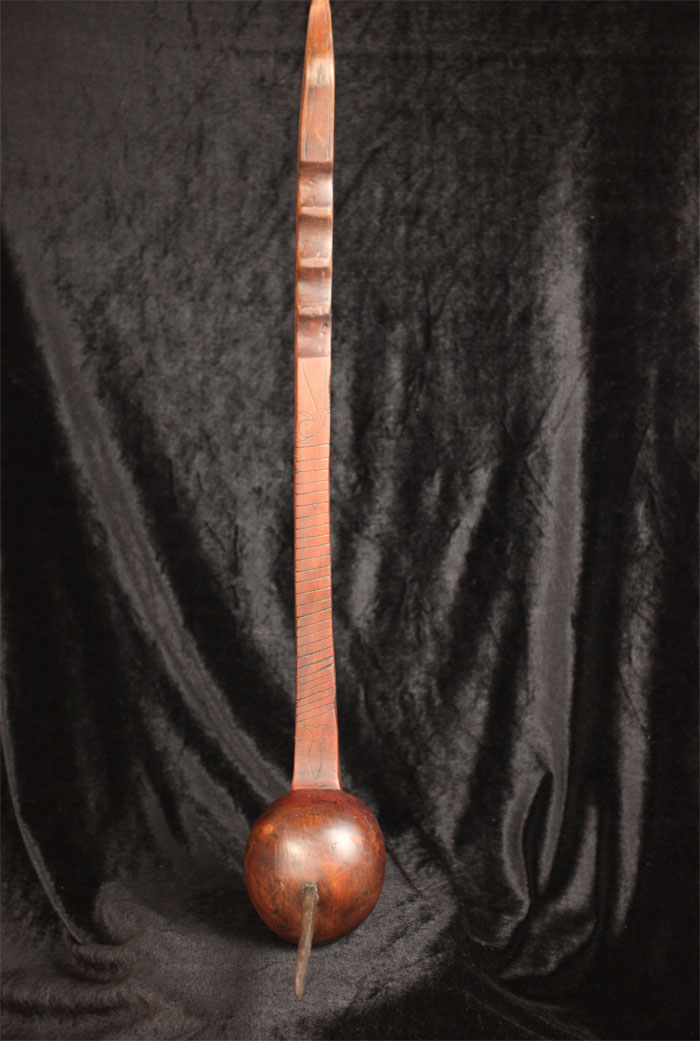
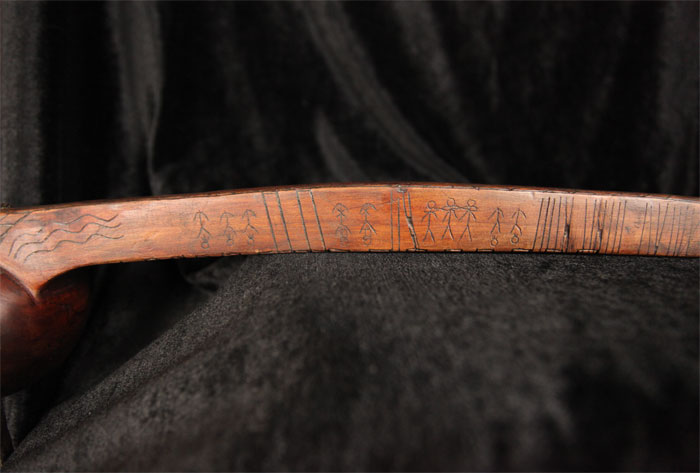
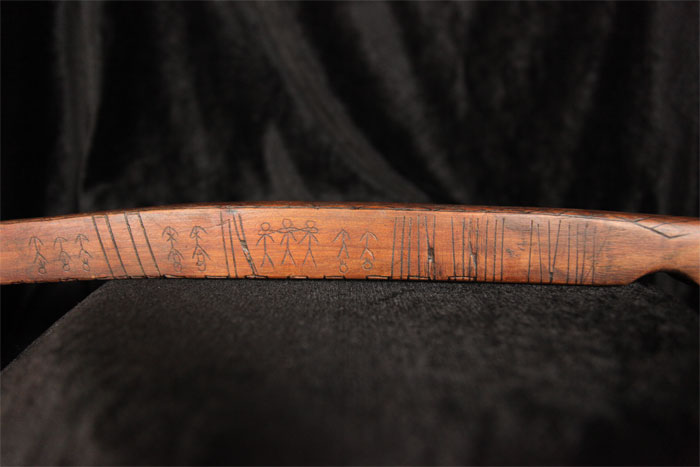
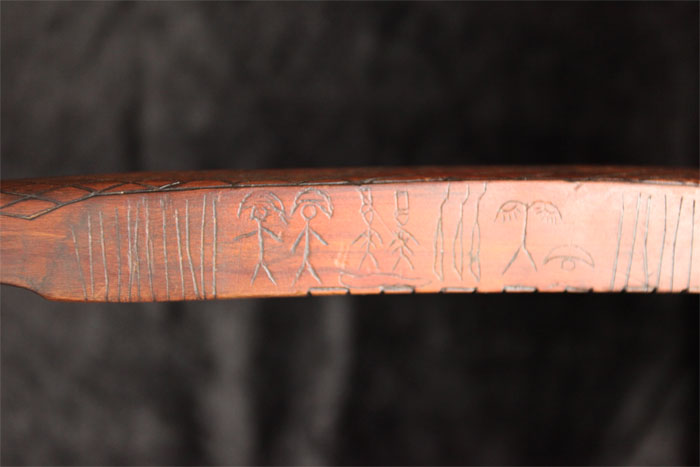
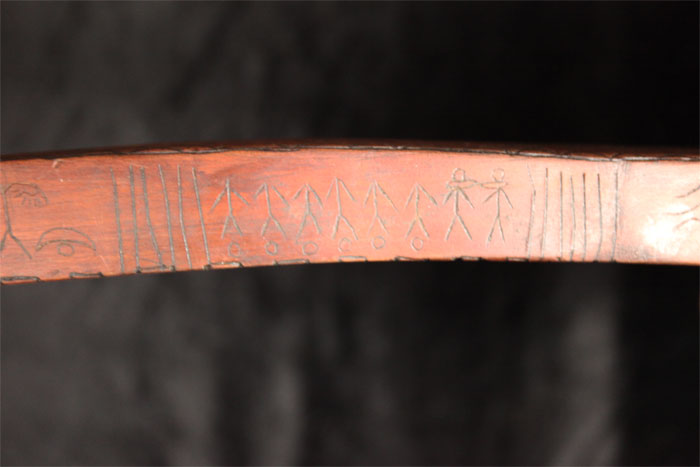
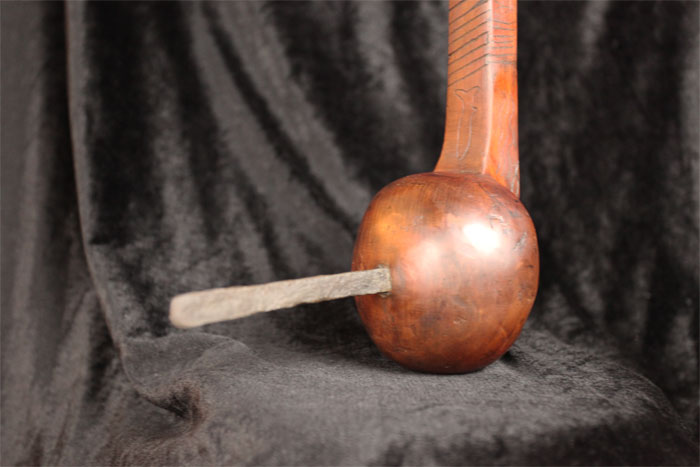
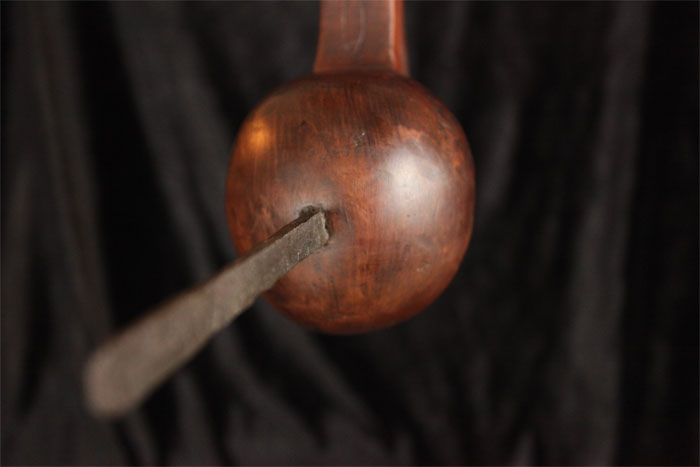
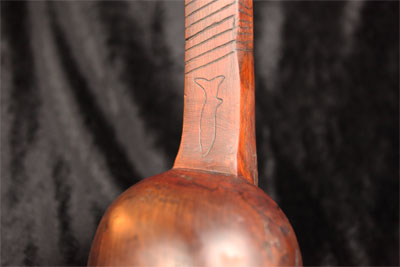
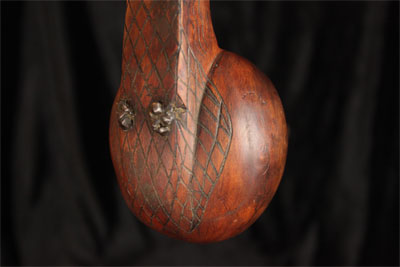
Above: c. 1790 - c. 1830 Ball Head War Club of Potawatomi Chief Senachwine (Sen-Noge-Wone) Illinois
Chief Senachwine's brothers were Gomo (eldest brother), Ignatius (Ignace), and the youngest was Ke-me (Nas-wah). Children of Potawatomi war Chief Sen-noge-wone were Kaltoo (Ogh-Och-Pees), Wabsai, and Shaumquesteh (Shaum-num-teh) who was the father of Wis-Ki-Ge-Amatyuk (also known as Captain John Buckshot) and Wah-quah-bosh-kuk (Roily Water).
Chief Senachwine (Sen-Noge-Wone) was a highly respected and powerful 19th century Illinois River Potawatomi chieftain who in 1815 succeeded his older brother Chief Gomo as chieftain of their band and was one of the last major Potawatomi chieftains to live in the region. A number of places in Illinois are named in his honor including Senachwine Township in Putnam County Illinois, Senachwine Creek, Senachwine Lake, and the Lake Senachwine Reservoir.
In April 1812, he and other Potawatomi chieftains met with Governor Ninian Edwards at Cahokia to discuss relations between the Potawatomi and the United States. Although opposed to an offensive war, Senachwine sided with Black Partridge during the Peoria War and commanded a sizeable force during the conflict. He later accompanied the Potawatomi peace delagation who were escorted by Colonel George Davenport to St. Louis where a peace treaty was eventually signed.
Around 1814, a mysterious Baptist preacher and missionary known as Wigby lived in his village. Wigby was allowed to baptize him and later slowly pushed and attempted to guide Senachwine to Christianity. However, despite Wigby's attempt to dissuade him, Senachwine refused to give up polygamy and retained his several wives. After Wigby's death, he was buried on a high bluff overlooking Senachwine's village. He succeeded his older brother Gomo as head chieftain of the Illinois River band of Potawatomis and was a respected signatory of several historic treaties between 1810s and 1820s with his Potawatomi people and the United States during the shaping of the country. He and Black Patridge remained the leading chieftains of the Potawatomis for over a decade before their positions of authority and influence were assumed by Shabbona and later Waubansee.
During their rule, many within the nation of the Potawatomis lost much respect for both Shabbona and Waubansee because from the Indians (Potawatomis) standpoint felt that the treasonable conduct of them both was shameful as they both took up arms against their own race and relatives. The Sauks killed their influence and ruined their standing amongst their own nation and people.
As decades passed and stories were told, it was noted by Perry Armstrong, United States Indian Service, Potawatomi Agency, December 13, 1880, that in documenting the viewpoints and life upon the reserves, that both Shabbona and Waubansee were really looked upon by these Indians (Potawatomis) with that kind of loathing that we do upon the name and deeds of Benedict Arnold. Hence, there was little to show for the sons of either of them to gain or maintain any standing in their tribe.
Chief Senachwine's sons and grandsons would later again take position as the respected leaders of the nation. A year before his death, Senachwine believed that the Potawatomi Nation and eventually all Native Americans would become extinct. His eldest son, Kaltoo (Ogh-och-pees), succeeded him as chieftain after his death in the summer of 1831. He was buried on a high bluff overlooking the village like the missionary Wigby years before and a wooden monument was placed on his grave. A black flag was also flown from a high pole placed next to the monument and could be seen from the gravesite for several years afterwards. Two years later, his Potawatomi Band was removed to North Eastern Kansas.
Black Hawk's Appeal To The Pottawatamie Warriors
The main object of Black Hawk in attending this feast, was to induce the Pottawatamies to join him in a war of extermination against the frontier settlers of the northwest. Many of the chiefs had already pledged themselves to his support, and the scheme was fast gaining favor with the warriors. While Paine was preaching, Black Hawk sat on the ground in front of him, watching the effect of his words upon the warriors. But when he found that the eloquence of the speaker was about to ruin his cause, he sprang to his feet in a terrible rage, and waving his tomahawk over his head, he denounced Paine as an enemy of the red man, his religion as coming from the evil one, and only fit for White men and squaws. He appealed to the warriors for the sake of their fathers to stand by him in his grand scheme for exterminating the whites, and thereby sustain the honor of their race. In this appeal he said:
"The whites have already ordered me and my people away from our beautiful home at Rock Island, compelling us to give up our wigwams, cornfields, and hunting grounds, and leave the graves of our fathers to be plowed over by our enemies. The land which the Great Spirit gave unto our fathers as a possession for themselves and their children forever, is not about to be taken from us. We are compelled to leave our country, the haunts of our youth, with its big rivers, beautiful green prairies, its shady groves and go away into a strange land, leaving all that is dear unto us in the possession of the conquerors. And before many moons you will have to leave your homes and seek a refuge beyond the "Father of Waters." Already the whites are building wigwams among you, and the sound of their axe is heard cutting down the forest to scare away the deer. Soon the game will leave - your trails will be fenced up, and you will be driven from the land of your fathers. Therefore rise in your might, tomahawk the intruders - cut the throats of their squaws and little ones, so that in future no pale face will settle among you."
Speech of Senachwine
Seated on the ground in front of Black Hawk, and listening to his speech, was an Indian stricken in years, but whose countenance, at the remarks of the last speaker, became flushed with excitement, and for the time being showed some of the vigor of youth. For more than fifty years the voice of this Indian had been heard in council, and by his wisdom and goodness he had long since been styled the father of his people. He had acquired great celebrity throughout the west, and his fine oratory eulogies from writers, both in prose and poetry. The Indian was Senachwine, the principal chief of the Pottawatamies. At the conclusion of Black Hawk's speech, he rose to his feet, his face glowing with enthusiasm, while around his massive brow, and blowing to and fro by the wind, were long locks of hair whitened by the snows of eighty-six winters. Throwing his blanket from his shoulders, and straightening himself up to his full height, he said:
"For more than seventy years I have hunted in this grove and fished in this stream, and for as many years I have worshipped on this ground. Through these groves, and over these prairies in pursuit of game, our fathers have roamed, and by them this land was left unto us an heritage forever. No one is more attached to their home than myself, and no one among you is so grieved to leave it. But the time is near at hand, when the red men of the forest will have to leave the land of their nativity, and find a home towards the setting sun. The white man of the east, whose numbers are like the sand of the sea, will overrun and take possession of this country. They will build wigwams and villages all over the land, and their domain will extend from sea to sea. In my boyhood days I have chased the buffalo across the prairies, and hunted elk in the grove; but where are they now? Long since they have left us; the near approach of the white man has scared them away. The deer and the turkey will go next, and with them, the sons of the forest. Resistance to the aggression of the whites is useless; war is wicked and must result in our ruin. Therefore let us submit to our fate, return not evil for evil, as this would offend the Great Spirit and bring ruin upon us. The time is near at hand when our race will be extinct, and nothing left to show to the world that we ever did exist. As for myself I have no reflections for the past, nor have I any misgivings for the future; my race is nigh run, and soon I will be gathered to my fathers. My bones will be laid away in that beautiful green knoll, which overlooks the valley of Senachwine, and my spirit will go to that happy hunting ground, where my fathers before me have gone. Our white friend (Paine) has been telling us of a Savior who died to save the world. Of this Savior I know nothing; but this I do know, the monitor within my breast has taught me the will of the Great Spirit, and now tells me that good Indians will be rewarded, and bad ones punished. My friends do not listen to the words of Black Hawk, for he is trying to lead you astray. Do not imbrue your hands in human blood; for such is the work of the evil one, and will only bring retribution upon your own heads."
At the conclusion of Senachwine's speech, the warriors with loud acclamations, declared their intention of following his advice, and remain at peace with their white neighbors. By this speech Black Hawk's cause was ruined, and when he found the Pottawatamies would not join his standard he left for his home, when the feast broke up.
Senachwine's Death and Burial
About one year after the events above narrated, as Senachwine was returning from a neighboring village where he had been spending a few days, as he came cantering his pony into his own village, old and young ran out to meet him, and welcome his return. But as he raised his hand to address them, he fell to the ground and expired almost instantly. To his people it was like the falling of a mighty oak in the stillness of the forest. All mourned his death as that of a father, for long since he had been regarded as the benefactor of their tribe. His three wives, with his numerous children and grand children, painted their faces black, and accompanied by the whole village, with loud wailing, followed his remains to its long resting place. According to Senachwine's request, he was buried on the bluff overlooking the village and valley of Senachwine, and for many years afterwards Indians from a distance made an annual pilgrimage to the grave of the sainted dead.
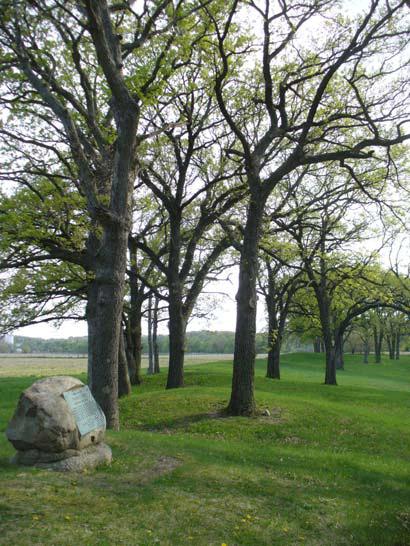
Above: Gravesite of Chief Senachwine (Sen-Noge-Wone) Illinois
In the summer of 1835, 23 Potawatomi warriors travelled over 500 miles to visit the gravesite of Chief Senachwine. With their faces blackened and their heads wrapped in blankets, they performed a ritual invoking the Great Spirit to protect the gravesite and remains of the chieftain. According to a local resident observing the ceremony, the warriors spent several hours knelt around the gravesite as "their wails and lamentations were heard far away."
The following morning, they performed the "Dance of the Dead" which continued for several days before departing. A short time after, Senachwine's grave was robbed of its valuables including his tomahawk, rifle, several medals, and other personal effects. The chieftain's bones had also been scattered around the site. Members of his band respectfully returned to the site to rebury his remains and again placed a wooden monument over his gravesite for protection. James R. Taliaferro, who had been present at the reburial, later built a cabin near the gravesite and claimed that "Indians from the west at different times made a pilgrimage to the grave."
The sons of the American Revolution chapter in Peoria Illinois placed a bronze memorial plaque engraved with his speech to Black Hawk pleading for peace prior to the Black Hawk War at the supposed burial spot of Senachwine north of present day Putnam County, Illinois on June 13, 1937. During the ceremony, an address was given by author P. G. Rennick. Five tribal members of the Prairie Band Potawatomi from Kansas were also in attendance during the ceremony. James Wahb-No-Sah, biological great grandson of Chief Senachwine was one of the five in attendance.
Below you will see Potawatomi agency notes in the year 1880 on historic and present leadership within the Potawatomi Nation.
The Sauks and the Black Hawk War:
With Biographical Sketches, etc
By Perry A. Armstrong
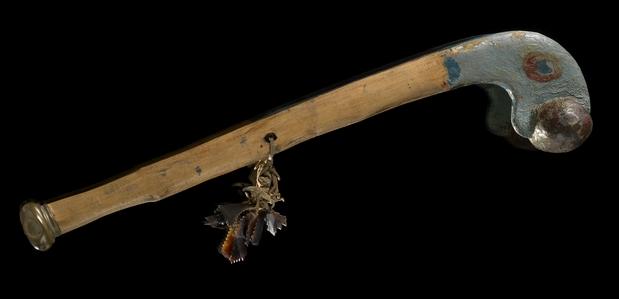
Above: Potawatomi War Dance Club, National Museum of the American Indian
UNITED STATES INDIAN SERVICE,
POTTAWATTAMIE AGENCY, December 13th, 1880.
HON. P.A. ARMSTRONG, Morris, Illinois
Sir - It is not likely that I can give you any information in reference to the personal history of Shab-e-nay that you are not already possessed of. I learn from Eli G. Nadeau, a distant relative of the chief, whose mother he always visited when in this country, that he was always self-possessed, well clothed, reasonable in his views of men and their affairs, and zealous in advancing peaceful relations between whites and Indians. His son, Matwas, now resides on the Pottawattamie Reserve, in this agency, but has never participated in controlling the tribe or been invested by it with any authority. Of his daughters residing here, Ce-be-qua, wife of Yah-bee, lately deceased, was a good kind of woman. Moquska and Matwawieska are still living and are widows, and both very poor. All of his family are recognized as honest, inclined to industrial pursuits, and at least ordinarily industrious. The head chief of the Pottawattamies at this time is Shaugh-nes-see, a distant relative of Sen-oge-wone, the war-chief of the Pottawattamies at the date of the massacre at Chicago in 1812, which was, to a great extent, if not fully, due to his influence. The Prairie Band, now constituting the Pottawatamies, were the band that were led by Sen-oge-wone and his associates in the massacre. Shaugh-nes-see has as speaker his brother, Pis-she-dam. Mas-quas, a speaker of the tribe, represents the party of the late head chief, Pam-muck-muck, nephew of Wab-sai,* who was the son of Sen-oge-wone. The remaining councilmen of the tribe are Pam-o-zo, Man-ah-wuck, Kack-kack and Mat-sep-do, all braves.
"The tribe now numbers 451 persons present on the reserve, 280 in Wisconsin and about thirty in the Indian Territory. Their reserve contains 77,357 57-100ths acres of land, of this 2,035 have been put in a state of cultivation during the past seven years and 400 acres were broken last year. All of the cultivated land is enclosed by the most substantial fencing in the boundaries of the State of Kansas. The Indians have 1,150 head of horses and are rapidly gaining stock of all kinds. One hundred and two persons or heads of families are engaged in agricultural pursuits, who occupy 106 log and frame houses, generally well built and comfortable. The average attendance at their boarding school during the month of November, 1880, was 29 scholars. They do not express any desire to change their relations with the governmant and, in fact, are resolutely opposed to becoming citizens under any modified conditions. Their mutual dislike to any change has been intensified by the present unfortunate condition of 1,600 of their bretheren who became citizens by the provisions of the Pottawattamie treaty of Nov. 15, 1861. Their money was rapidly squandered, their lands sold, and they are now generally demoralized, worthless, and paupers. The class who became citizens were known as 'Mission' and 'Wood' Indians, both controlled by sons of Topenibe, the great peace chief of the Pottawattamies during the war of 1812.
"I would be glad could I forward you information regarding Shab-e-nay that would be useful, but these Indians know but very little of him, and I believe do not like him any too well. The financial condition of the Pottawattamies of the reserve is as follows:
Principal of Annuity.......................................................................$392,800.00
School Fund. Principal.....................................................................$86,000.00
Smiths and Assistants. Princippal........................................................$20,000.00
Improvement Fund. Principal...........................................................$179,000.00
Proceeds of Sale of Surplus Land. Principal..........................................93,000.00
Accrued Interest on Last Above...........................................................24,000.00
-----------------------------------------------------------------------------------------------------
Total.................................................................................................$794.800
In 1860 there were 2,180 Pottawattamie Indians on the reservation. Under the civilization act before referred to 1,400 of them became citizens in 1861, and about 200 more in 1862. When they became citizens with all the rights and privileges thereto attached including the right of suffrage, and to hold office, they were dropped as Indians. Hence the tribe was reduced to about 580 souls in 1862. In 1880 we find from the statement of Mr. James, 451 on reservation, 280 in Wisconsin and 30 in the Indian Territory, showing a total of 761, or an increase of 181 in about twenty years, which does not indicate their decadence and ultimate extinctin, as is true, as a rule, with the other Indian nations.
Sen-noge-wone, or, Rock in the Water - which means that he was so much firmer than other Indians that he was a rock around which other Indians rippled like water - was the war chief of the Pottawattamies for very many years, and was superseded, in 1814, by Wa-ban-see.
Mas-quas, whose wife is the grand-daughter of Sen-noge-wone, says that during the war between the United States and Great Britain of 1812-14, Ke-me, or Nas-wah, a younger brother of Sennogewone "traveled towards the French where he remained until the close of the war, then returning to his tribe, he informed Sennogewnoe that the greater numerical force of the white people prevented the possibility of any success in war against them. Sennogewone soon surrendered and thereafter was not recognized as chief." But Wabansee, having taken part with the whites against Black Hawk in 1832, was pushed aside and superseded by Ogha-och-pees, eldest son of Sennogewone, who died soon after and was succeded by Wabsai, who died in 1869, and was succeeded by Pam-muck-muck, his grandson. At his death, in 1874, Shaugh-nes-see was elected chief, and now holds that position. The treasonable conduct of Shaubenee and Waubansee, from the Indians' standpoint, in taking up arms against their race and relatives, the Sauks, killed their influence and ruined their standing among their nation and people. They were really looked upon by these Indians with that kind of loathing that we do upon the name and deeds of Benedict Arnold. Hence there was little show for the sons of either of them to gain or maintain any standing in their tribe.